The inspection report has not changed much in fifty years. A technician tests, writes findings by hand, transfers numbers to a spreadsheet, and emails a PDF that may or may not reach the right person. The instruments have advanced. The workflow has not.
This is the central contradiction of modern NDT: world-class sensors feeding into analog documentation. It is inefficient, error-prone, and in safety-critical industries, genuinely dangerous.
What paper-based inspection costs you
Data degrades at every transfer point. Field notes become summaries. Summaries become tables. Tables become PDFs. By the time an engineer reviews findings, the raw measurement context is gone. Anomalies detected in one part of a structure never inform the inspection of another. Patterns across assets or project history stay invisible. And when something fails, a binder of paper reports cannot establish who inspected what, with which instrument, calibrated when.
What digitization actually means
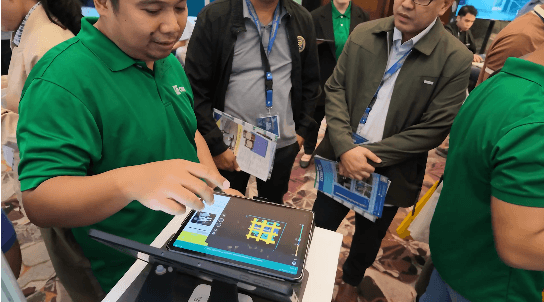
Digitizing NDT is not scanning forms and saving them as PDFs. True digital inspection means data flows directly from the instrument to a structured, searchable record with no manual re-entry. Findings are tagged to a physical location on a floor plan in real time. Instrument serial numbers, calibration data, operator credentials, and environmental conditions are captured automatically. A project manager in Manila can review an inspection happening in Cebu as it unfolds.
This is not a future capability. It exists today.
technology: Screening Eagle Technologies / Proceq
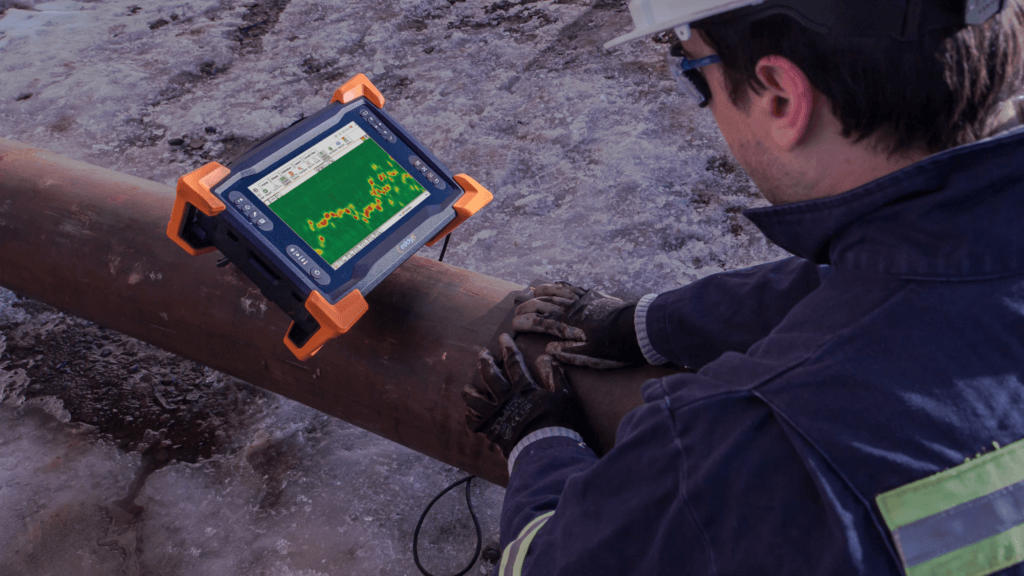
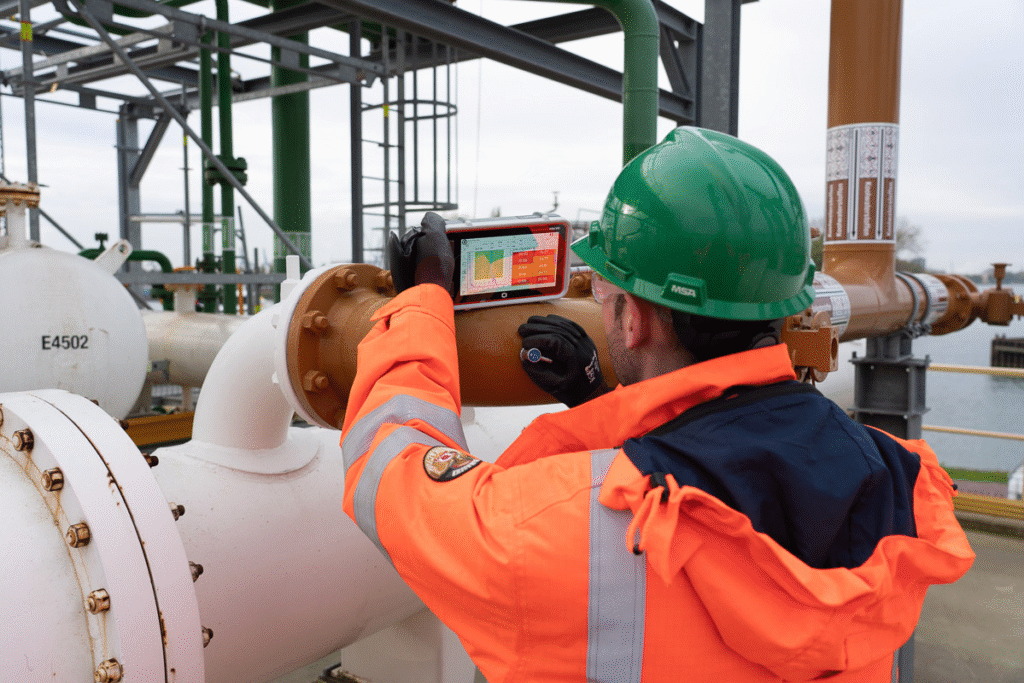
Proceq instruments, from the Schmidt Hammer OS8200 to the Pundit PD8050 ultrasonic array and the GP8000 ground penetrating radar, transmit data wirelessly in real time. No transcription. No lost notes. Measurements are timestamped and immediately linked to the asset being inspected.
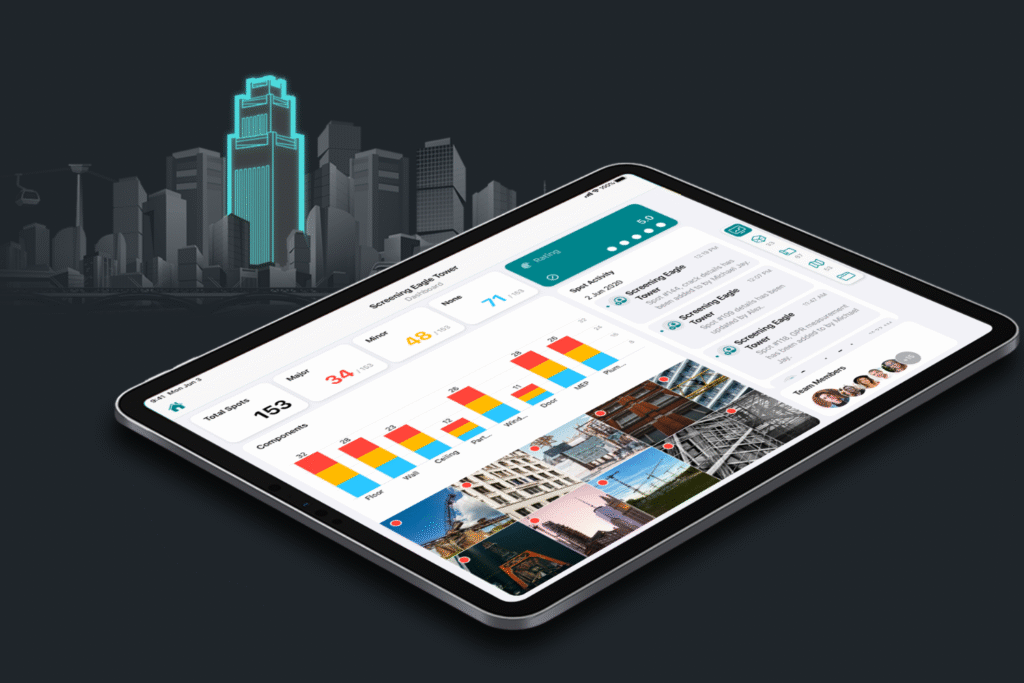
Screening Eagle’s INSPECT platform organizes that data onto structural floor plans. AI-assisted analysis flags anomalies. A dedicated camera lets inspectors tag visual findings as they walk a structure. The output is a complete, auditable digital record produced on-site, with no post-inspection data entry required.
The strategic case
Digital records accumulate into asset history. Five years of GPR and ultrasonic data on a structure allows engineers to model deterioration trends and project remaining service life. That is something no individual paper inspection can support. Digital records also satisfy the regulatory and insurance scrutiny that paper binders increasingly cannot. And when an earthquake strikes, an asset owner with a pre-event digital baseline can direct response teams precisely, comparing post-event findings against documented conditions rather than guessing.
The Philippines cannot afford to wait
The infrastructure boom underway is generating assets that will require inspection for decades. Establishing digital workflows now, while those programs are being built, costs a fraction of retrofitting analog systems later.
Cifra Marketing Corporation, authorized Philippine distributor of Screening Eagle Technologies and Proceq, supplies the full digital inspection stack: connected instruments, consumables, and INSPECT platform access, with the training and support to deploy them effectively.
The instrument upgrade is only half the transformation. The workflow upgrade is the other half.
Cifra Marketing Corporation. One Stop NDT Solution for any Industry.
Photo Source: https://www.screeningeagle.com/en/about-us/news/screening-eagle-inspect-moves-industry-into-the-digital-age