Walk into any conversation about sustainable manufacturing and you’ll hear the same shortlist: renewable energy, carbon capture, circular sourcing, ESG reporting. What you almost never hear mentioned is inspection. Non-destructive testing may be doing more measurable, immediate work for sustainability than half the initiatives that get the stage time. That’s not marketing exaggeration. It’s a gap in how the industry talks about itself.
The Quiet Assumption Behind Every Replacement Decision
A lot of asset management runs on a simple default: components get replaced on a schedule. A pressure vessel hits its design life. A pipeline segment reaches its inspection interval. In the absence of better information, replacement feels safer than the alternative.
But calendar-based replacement is a guess dressed up as a policy. It asks how much time has passed, not whether the asset is actually degraded. That gap is where a lot of avoidable waste lives: wasted material, wasted fabrication energy, wasted capital spent replacing something that didn’t need replacing.
NDT closes that gap. It swaps how much time has passed for what condition is this actually in, and that’s a sustainability lever whether or not anyone’s calling it one.
What This Looks Like in Practice
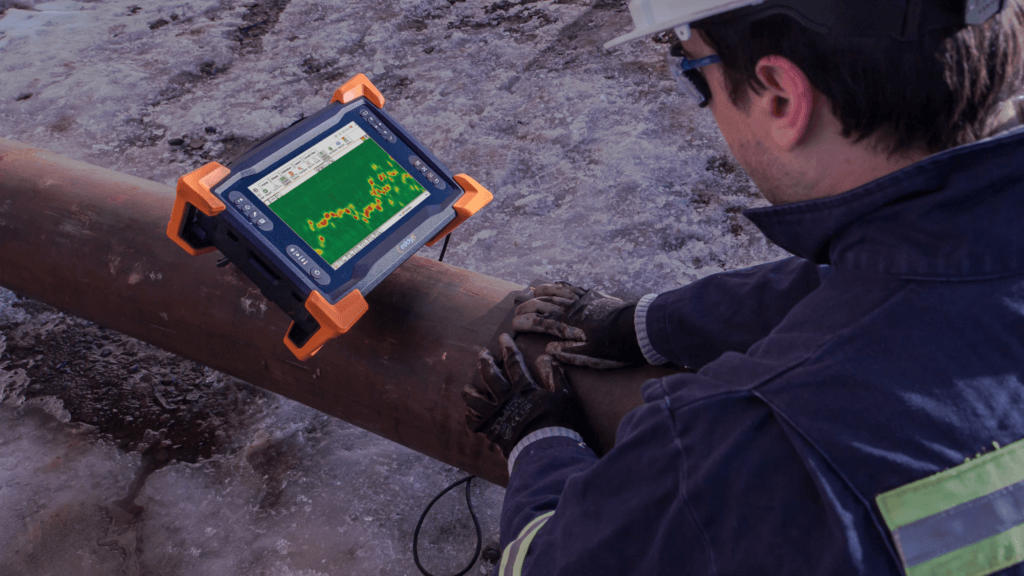
Take a refinery case where aging storage tanks were headed for decommissioning. Digital radiography found localized corrosion, but not enough to justify scrapping them. Targeted repairs extended their service life by several years, saving the facility significant cost while maintaining compliance. No new steel smelted, no new tank fabricated and shipped, no new emissions to replace something that still had life left in it.
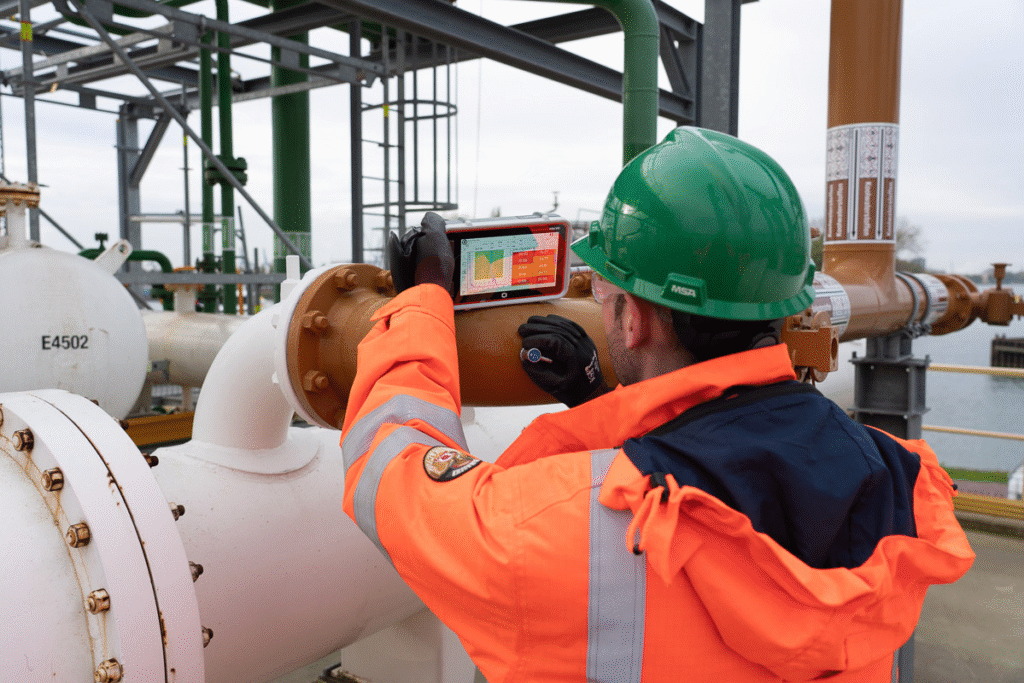
Multiply that decision across an entire asset fleet, and it stops being a smart repair call and becomes a structural approach to reducing industrial waste. The same logic runs across pipelines, pressure vessels, boilers, and structural welds: ultrasonic and radiographic testing don’t just catch failures early, they answer whether replacement was ever necessary at all.
Manufacturing Waste Starts Earlier Than People Think
There’s a second layer here: NDT’s role inside manufacturing itself, not just in asset maintenance after the fact.
When gears, shafts, turbines, and welds are inspected during production rather than after a field failure, defects get caught while the component is still cheap to fix or scrap. A flawed weld caught at fabrication costs a fraction of the same flaw caught after installation. Every defect found early is material, energy, and labor that didn’t get wasted downstream.
QA/QC and sustainability get treated as separate disciplines, but at the operational level, they’re often the same decision viewed from different angles.
The Harder Version of the Argument
It would be easy to stop here with something reassuring. But the honest version has to include the other side of the ledger.
NDT isn’t waste-free. Radiographic film and chemical processing generate their own consumable waste. Worn equipment parts need proper disposal, and mishandled chemicals carry real environmental risk. An industry that positions itself as a sustainability solution has some obligation to manage its own footprint too, through better waste handling and continued investment in methods like digital radiography that reduce dependence on film in the first place.
None of that undercuts the core argument. It just means the case is strongest when made honestly: a net positive that’s still working on itself, not an unqualified good.
Why This Matters for How the Industry Talks About Value
NDT has traditionally been sold on safety and compliance, not sustainability. Those aren’t wrong framings, just incomplete ones. Safety and compliance answer why you have to do this. Sustainability answers why doing it well matters beyond the plant walls.
Buyers increasingly have to answer to both. ESG reporting requirements and sustainability scorecards are shaping procurement decisions in ways that didn’t exist a decade ago. An inspection program described as extending asset life and reducing material waste, not just staying compliant, gives technical teams a stronger case to bring to leadership.
NDT professionals have spent decades getting good at finding flaws. They haven’t spent nearly as much time translating what that flaw-finding means in sustainability terms, even though the translation is already sitting in the data.
The Actual Decision in Front of You
Every inspection is implicitly a sustainability decision, whether it’s framed that way or not. Repair versus replace. Extend versus scrap. Condition-based versus calendar-based. These are the same choices that show up in every sustainability framework, just made at the level of a weld or a tank instead of a corporate policy.
The methods to make that decision with real data, instead of a guess, already exist and are already deployed across manufacturing, energy, and infrastructure. The gap isn’t technical. It’s narrative: an industry that hasn’t yet claimed the sustainability credit it’s already earning.
That’s a gap worth closing, one inspection at a time.
Sources referenced: Ultrascan, “The Impact of NDT on Extending the Lifespan of Industrial Equipment” (2025); Inspenet, “The Impact of NDT on Equipment and Pipeline Service Life” (2025); OnestopNDT, “Non-destructive Evaluation Sustainable Practices” (2024).